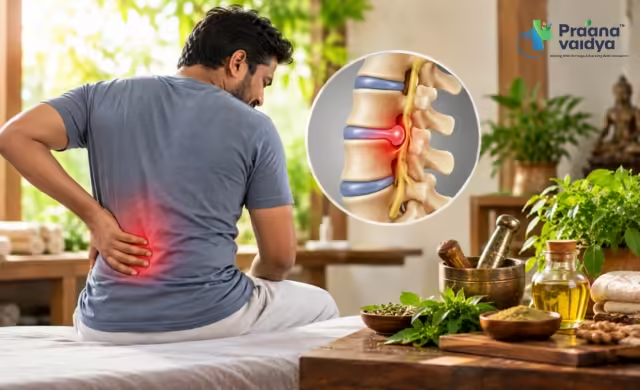
Back pain caused by a slip disc or disc bulge can affect everyday activities such as sitting, walking, bending, sleeping and working. In some people, the discomfort may also travel into the legs or be accompanied by tingling, numbness or stiffness.
For people looking for conservative options, Ayurvedic treatment for slip disc and disc bulge may be considered as part of a structured approach to pain management, mobility and rehabilitation. At Praanavaidya, Ayurvedic spine care focuses on understanding the individual’s symptoms, lifestyle, physical condition and overall health before recommending a personalised care plan.
Ayurveda does not treat every case of back pain in the same way. More importantly, symptoms such as severe weakness, loss of bladder or bowel control, numbness around the groin, major trauma or rapidly worsening pain require prompt medical assessment rather than self-treatment.
What Is a Slip Disc?
The spine is made up of individual bones called vertebrae. Between these bones are soft, cushion-like structures known as intervertebral discs.
Each disc contains a softer inner portion surrounded by a tougher outer layer. These discs help absorb pressure and allow the spine to move more comfortably.
The term slip disc is commonly used to describe changes in an intervertebral disc, although the disc does not literally slip out of position.
Depending on the condition, a person may have:
- Disc bulge
- Disc protrusion
- Herniated disc
- Disc extrusion
- Degenerative disc changes
When disc material irritates or compresses a nearby nerve, it may produce pain and neurological symptoms.
What Is a Disc Bulge?
A disc bulge occurs when part of an intervertebral disc extends beyond its normal boundary.
Some disc bulges cause no symptoms and may be detected incidentally during an MRI scan. Others may irritate nearby nerves and cause pain, stiffness, numbness or weakness.
Disc bulges are commonly seen in the:
- Lower back or lumbar spine
- Neck or cervical spine
Lumbar disc problems are particularly associated with lower back pain and symptoms extending into the buttocks or legs.
Common Symptoms of Slip Disc and Disc Bulge
Symptoms differ depending on the location and severity of the disc problem.
Common symptoms may include:
Lower Back Pain
Pain may be mild, moderate or severe and can become worse after sitting for long periods, bending, lifting or certain movements.
Pain Travelling Down the Leg
Nerve irritation in the lower back can produce pain that travels through the buttock and down one leg. This is commonly referred to as sciatica.
Tingling or Numbness
A compressed or irritated nerve may cause pins-and-needles sensations or reduced sensation in the leg or foot.
Muscle Weakness
In some cases, nerve compression can affect muscle strength.
Back Stiffness
People with disc problems may experience difficulty bending, standing upright or changing positions.
Neck and Arm Symptoms
A cervical disc bulge may cause neck pain accompanied by pain, tingling or numbness extending into the shoulder, arm or hand.
Why Do Disc Problems Develop?
A slip disc or disc bulge may develop gradually or occur following physical strain.
Possible contributing factors include:
- Age-related disc degeneration
- Repeated lifting
- Poor lifting technique
- Prolonged sitting
- Sedentary lifestyle
- Excess body weight
- Weak core muscles
- Repetitive spinal strain
- Sudden twisting movements
- Injury or trauma
However, having a disc bulge on an MRI does not automatically mean it is responsible for a person’s pain. Clinical symptoms and examination findings need to be considered along with imaging results.
Ayurvedic Understanding of Slip Disc and Back Pain
In Ayurveda, musculoskeletal pain and stiffness are commonly assessed in relation to the functional balance of the body, particularly Vata dosha.
Vata is traditionally associated with movement and neuromuscular functions. Ayurvedic practitioners may assess factors such as stiffness, pain pattern, digestion, sleep, physical activity, age, constitution and lifestyle before determining an individualised management approach.
The Ayurvedic interpretation does not replace modern diagnostic methods such as neurological examination, X-rays or MRI when these investigations are medically indicated.
An integrated assessment can be particularly important when symptoms suggest nerve involvement.
Ayurvedic Treatment for Slip Disc and Disc Bulge
Ayurvedic treatment for disc bulge may involve a combination of external therapies, internal medicines, dietary guidance, lifestyle modification and rehabilitation.
The exact treatment varies from person to person.
1. Kati Basti
Kati Basti is an Ayurvedic therapy commonly used for lower back discomfort.
During the procedure, a ring made from herbal dough is placed over the lower back and filled with warm medicated oil for a prescribed duration.
It is traditionally used to support relaxation and reduce stiffness around the lumbar region.
Kati Basti should be performed under professional guidance and should not be viewed as a method of physically pushing a bulging disc back into position.
2. Abhyanga
Abhyanga involves therapeutic application and massage using medicated oils.
Depending on the person’s condition, gentle oil therapy may be included to support muscle relaxation and improve comfort.
Aggressive massage or forceful spinal manipulation may not be appropriate when there is acute nerve compression, severe pain or certain spinal conditions.
3. Swedana
Swedana refers to controlled therapeutic heat or fomentation used in Ayurveda.
Warmth may help relax tight muscles and reduce stiffness in selected patients. The suitability of heat therapy depends on the individual’s symptoms and medical condition.
4. Patra Pinda Sweda
Patra Pinda Sweda is a traditional therapy in which selected medicinal leaves and herbal ingredients are prepared in cloth boluses and applied using controlled warmth.
It may be recommended in selected musculoskeletal conditions as part of a broader Ayurvedic treatment plan.
5. Kizhi Therapy
Kizhi refers to different forms of herbal bolus therapy. The type of ingredients and method used vary according to the patient’s condition.
It may be considered for stiffness, muscle discomfort and restricted movement when appropriate.
6. Basti Therapy
Basti is an important therapeutic procedure described in Panchakarma.
Different forms of Basti may be considered by qualified Ayurvedic physicians depending on an individual’s condition and Ayurvedic assessment.
Panchakarma procedures should not be undertaken without proper evaluation and medical supervision.
7. Ayurvedic Medicines
Ayurvedic doctors may prescribe herbal or traditional formulations according to symptoms, constitution and associated health conditions.
Self-medication should be avoided because Ayurvedic medicines are not automatically suitable for everyone. Some herbs and formulations can interact with medicines or may not be appropriate during pregnancy, kidney disease, liver disease or other medical conditions.
Can Ayurveda Cure a Slip Disc Without Surgery?
There is no single answer because disc bulge treatment depends on the severity of the condition.
Many people with uncomplicated disc-related back pain are initially managed conservatively rather than surgically. Conservative management may include activity modification, medicines, physiotherapy, exercise and other supportive approaches.
Ayurvedic care may also be considered as part of a non-surgical management programme for selected patients.
However, claiming that every slip disc can be permanently cured without surgery would be misleading.
Surgery may need to be considered when there is:
- Progressive muscle weakness
- Significant neurological deficit
- Severe nerve compression
- Persistent disabling symptoms despite appropriate conservative treatment
- Loss of bladder or bowel control
- Cauda equina syndrome or another neurological emergency
The decision should be made after appropriate evaluation by a qualified medical professional.
Ayurvedic Treatment for Sciatica Caused by Disc Problems
Sciatica describes pain associated with irritation or compression of the sciatic nerve or its contributing nerve roots.
Symptoms may include:
- Lower back pain
- Buttock pain
- Leg pain
- Burning sensations
- Tingling
- Numbness
- Weakness
When a disc problem is contributing to sciatica, treatment should address both symptom control and functional recovery.
An Ayurvedic care programme may include suitable external therapies, internal medicines, posture correction, supervised movement and lifestyle recommendations.
Persistent numbness or muscle weakness should always be medically assessed.
The Role of Exercise in Non-Surgical Disc Bulge Treatment
Complete bed rest is generally not the long-term solution for uncomplicated back pain.
Appropriate movement and rehabilitation can help improve spinal function, muscle strength and confidence in daily activity.
Depending on the patient’s condition, a rehabilitation programme may include exercises for:
- Core stability
- Hip mobility
- Back muscle strengthening
- Hamstring flexibility
- Posture
- Controlled spinal movement
Exercises should be selected according to the person’s diagnosis and symptoms.
A movement that helps one person may worsen symptoms in another, especially when nerve compression is present.
Yoga for Slip Disc and Disc Bulge
Yoga may support flexibility, strength and relaxation when practised appropriately.
However, people with symptomatic disc problems should avoid randomly attempting advanced yoga poses from online videos.
Deep forward bends, twisting movements or strenuous poses can aggravate certain disc conditions.
A doctor or qualified rehabilitation professional should first determine which movements are safe.
Lifestyle Changes That May Support Spine Health
Treatment works better when daily habits are also addressed.
Avoid Sitting Continuously
If your work involves prolonged sitting, take regular movement breaks.
Improve Your Sitting Position
Use a supportive chair and avoid remaining in a slouched posture for extended periods.
Lift Carefully
When lifting objects, avoid sudden bending and twisting movements. Use your legs where possible rather than placing all the load on your lower back.
Maintain a Healthy Weight
Excess body weight can increase mechanical load on the spine.
Stay Physically Active
Regular movement supports muscle strength and general spine health.
Pay Attention to Sleep
Use a comfortable sleeping position and mattress that provides adequate support.
There is no single mattress type that is ideal for every person with back pain.
Diet and Ayurveda for Spine Care
Ayurvedic dietary advice is usually individualised rather than based on one universal diet.
A balanced diet should also provide adequate:
- Protein
- Calcium
- Vitamin D
- Essential micronutrients
- Fibre
- Fluids
People with nutritional deficiencies may require medical assessment and appropriate supplementation.
Diet alone cannot reverse significant nerve compression or structural spinal disease.
When Should You See a Doctor Immediately?
Most back pain does not represent a medical emergency. However, certain symptoms require urgent assessment.
Seek immediate medical attention if back pain occurs with:
- Loss of bladder control
- Loss of bowel control
- Numbness around the genitals or inner thighs
- Rapidly worsening leg weakness
- Severe weakness in both legs
- Major accident or spinal injury
- Fever with severe back pain
- Unexplained weight loss with persistent pain
These symptoms should not be managed solely through home remedies, massage or alternative therapies.
How Is a Slip Disc Diagnosed?
Diagnosis usually begins with a detailed medical history and physical examination.
The doctor may assess:
- Pain location
- Muscle strength
- Sensation
- Reflexes
- Leg movement
- Walking
- Nerve tension
An MRI scan may be recommended when symptoms are severe, persistent, associated with neurological changes or when the diagnosis needs further clarification.
Not every person with back pain needs an immediate MRI.
Why Personalised Spine Care Matters
Two people can have similar MRI findings but very different symptoms.
One person may have a visible disc bulge without pain, while another person may experience significant nerve-related symptoms.
For this reason, treatment should not be based solely on the MRI report.
A personalised treatment plan should consider:
- Symptoms
- Clinical examination
- Nerve involvement
- MRI findings when available
- Age
- Occupation
- Physical activity
- Previous treatments
- Medical conditions
- Lifestyle factors
Non-Surgical Spine Care at Praanavaidya
At Praanavaidya, the approach to Ayurvedic spine care begins with understanding the patient rather than treating an MRI report in isolation.
Where appropriate, Ayurvedic therapies may be combined with lifestyle guidance, movement recommendations and ongoing monitoring.
The objective of conservative care is to support pain management, mobility and everyday function while recognising situations that require investigation, specialist referral or conventional medical treatment.
Conclusion
A slip disc or disc bulge does not automatically mean that surgery is required. Many patients can initially be managed through carefully selected conservative treatment, depending on their symptoms and neurological findings.
Ayurvedic treatment for slip disc and disc bulge may form part of a personalised non-surgical spine care programme that includes traditional therapies, lifestyle modification, appropriate movement and medical monitoring.
The most important step is receiving an accurate assessment before beginning treatment. Back pain accompanied by significant nerve symptoms should always be evaluated promptly so that serious spinal conditions are not overlooked.
Visit Us in-
Rajajinagar- 08065903133
Hubballi – 08065903145
Indiranagar- 08065903135
Mumbai-08065903118
Yelahanka- 08065903134
Mangaluru-08065903136
Chamrajpet-08065903132
Delhi-08065903140
Lucknow-08065903130
Frequently Asked Questions
Is Ayurvedic treatment good for a slip disc?
Ayurvedic therapies may be used as supportive conservative care for selected people with back pain or disc-related symptoms. Whether they are appropriate depends on the severity of the disc problem, neurological symptoms and the person’s overall medical condition.
Can a disc bulge heal without surgery?
Many people with disc bulges are managed without surgery, particularly when there is no progressive neurological deficit. Symptoms can sometimes improve with conservative treatment and rehabilitation. However, every case should be assessed individually.
How long does Ayurvedic treatment for disc bulge take?
There is no fixed treatment duration. Recovery depends on the location and severity of the problem, duration of symptoms, nerve involvement, physical condition and response to treatment.
Is massage safe for a slip disc?
Gentle therapeutic techniques may be appropriate for some patients, but forceful massage or spinal manipulation can be unsuitable in certain disc conditions. A qualified professional should assess the patient first.
Can Kati Basti cure a disc bulge?
Kati Basti is traditionally used as part of Ayurvedic management for lower back discomfort and stiffness. It should not be promoted as a guaranteed way to reverse the anatomical changes of a disc bulge.
Can Ayurveda help with sciatica?
Ayurvedic care may be considered as part of conservative management for selected cases of sciatica. Persistent weakness, increasing numbness or severe neurological symptoms require medical evaluation.
Praanavaidya
Healthcare Professional
Focused on patient-centric care and evidence-based treatment plans.
More from Praanavaidya