Brahmi is one of the best-known herbs in traditional Ayurveda and has long been associated with memory, learning, concentration, mental clarity, and emotional balance. It has traditionally been included in Ayurvedic formulations and wellness routines intended to support healthy mental function.
The Ayurvedic health benefits of Brahmi are commonly discussed in relation to memory, concentration, calmness, sleep, and overall mental wellness. In Ayurveda, Brahmi is traditionally associated with Medhya Rasayana, a category of practices and herbs connected with intellect and mental functions.
At Praanavaidya, Ayurvedic herbs are approached as part of a broader, individualised wellness system rather than as standalone cures. Brahmi may be considered according to a person’s constitution, lifestyle, digestion, sleep, age, and overall health needs.
Modern research has also investigated Brahmi, particularly Bacopa monnieri, for possible cognitive and neurological effects. However, traditional Ayurvedic concepts and modern scientific evidence are not the same, and further research is needed to establish the effectiveness of Brahmi for specific health conditions.
What Is Brahmi?
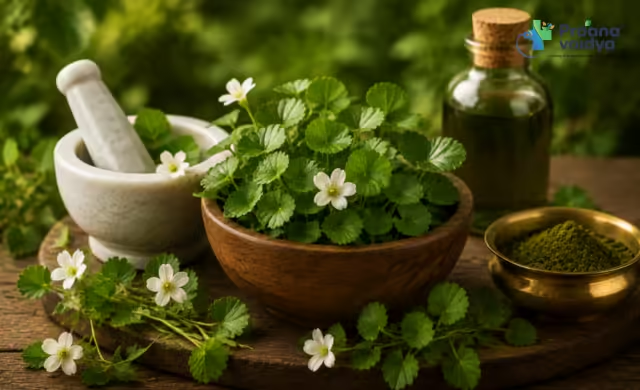
Brahmi is a name commonly associated with Bacopa monnieri, a small creeping herb traditionally used in Ayurveda.
The plant typically grows in moist environments and has small, succulent leaves. It has been used traditionally in various Ayurvedic preparations.
Brahmi may be available in forms such as:
- Fresh herb
- Dried herb
- Powder
- Capsules
- Standardised extracts
- Liquid preparations
- Herbal oils
- Traditional Ayurvedic formulations
An important consideration is that the name Brahmi may refer to different plants in different traditional contexts. Bacopa monnieri and Centella asiatica are sometimes associated with the name Brahmi. Therefore, checking the botanical name and ingredient list is important when purchasing a Brahmi product.
Brahmi in Ayurveda
Ayurveda traditionally associates Brahmi with Medhya Rasayana practices.
The term Medhya is broadly associated with intellect, memory, and mental functions, while Rasayana refers to traditional rejuvenative approaches.
Because of these traditional associations, Brahmi has historically been used to support:
- Memory and learning
- Concentration
- Mental clarity
- Calmness
- Relaxation
- Healthy sleep
- Overall mental wellness
These traditional applications are an important reason Brahmi continues to be used in Ayurvedic wellness practices.
Ayurvedic Health Benefits of Brahmi
1. Traditionally Used to Support Memory
Brahmi is particularly well known for its traditional association with memory and learning.
Ayurvedic practices have historically included Brahmi in routines intended to support intellectual activities and healthy mental functioning.
Modern research has also investigated Bacopa monnieri for aspects of cognitive performance, including memory. Some studies have reported potential improvements in certain memory-related measures, but the evidence is not conclusive enough to describe Brahmi as a treatment or cure for memory disorders.
2. May Support Concentration and Mental Clarity
Concentration can be affected by stress, inadequate sleep, fatigue, distractions, and an inconsistent daily routine.
Traditionally, Brahmi is used to support mental focus and clarity. It may be considered as one component of a broader routine that includes:
- Adequate sleep
- Regular physical activity
- Balanced nutrition
- Meditation
- Breathing practices
- Structured work or study periods
- Breaks from prolonged screen use
An herbal supplement cannot compensate for consistently poor sleep, chronic stress, or an unhealthy lifestyle.
3. Traditionally Used for Mental Calmness
Ayurveda has traditionally valued Brahmi for its association with mental calmness and balance.
Some people may include Brahmi in wellness routines during periods of demanding work, study, or occasional mental restlessness.
However, Brahmi should not be considered a replacement for professional care for anxiety, depression, or other mental health conditions.
4. May Support Stress Management
Persistent stress can affect concentration, sleep, mood, digestion, and daily functioning.
Brahmi has been investigated for possible effects on stress-related outcomes, although research is still developing and does not establish it as a treatment for stress disorders.
From an Ayurvedic perspective, Brahmi may be incorporated alongside lifestyle practices such as:
- Abhyanga
- Yoga
- Pranayama
- Meditation
- Regular sleep
- Mindful eating
- Adequate rest
This reflects the broader Ayurvedic emphasis on maintaining balance through both lifestyle and traditional herbal practices.
5. Traditionally Associated With Healthy Sleep
Good sleep plays an important role in memory, concentration, mood, and overall well-being.
Brahmi is traditionally included in some Ayurvedic routines intended to encourage mental relaxation and support healthy sleep.
However, persistent sleep difficulties should not be managed solely with herbal supplements. Ongoing insomnia can have many possible causes, including stress, medications, medical conditions, lifestyle factors, and sleep disorders.
If sleep problems continue, identifying the underlying cause is important.
6. Supports Overall Mental Wellness
Brahmi is traditionally regarded as a herb associated with mental and cognitive wellness.
Its traditional use may form part of a broader routine focused on:
- Mental clarity
- Learning
- Concentration
- Emotional steadiness
- Relaxation
- Healthy sleep
The traditional goal is not simply to increase mental activity but to support a balanced approach to mental well-being.
Brahmi and the Doshas
Ayurvedic recommendations traditionally consider an individual’s Prakriti, or constitution, along with their current state of balance.
Brahmi is discussed in relation to all three doshas, but its preparation, quantity, timing, and combination with other herbs may vary depending on the individual.
Brahmi and Vata
Vata is traditionally associated with movement, activity, and change.
When Vata is considered aggravated within the Ayurvedic framework, experiences such as restlessness, difficulty settling the mind, or irregular sleep may be described.
Brahmi is traditionally used in some Ayurvedic routines intended to promote calmness and mental steadiness.
Brahmi and Pitta
Pitta is traditionally associated with transformation, intensity, and heat.
Because Brahmi is traditionally described as having cooling and calming qualities, it may be included in certain Ayurvedic routines for individuals with Pitta-related considerations.
Brahmi and Kapha
Kapha is traditionally associated with stability, structure, and heaviness.
For individuals with Kapha-related tendencies, an Ayurvedic practitioner may consider the overall preparation, quantity, timing, and accompanying herbs before recommending Brahmi.
These descriptions belong to the traditional Ayurvedic framework and should not be interpreted as modern medical diagnoses.
Brahmi for Students and Mental Work
Brahmi has traditionally been associated with learning and intellectual activities, which contributes to its popularity among students and people involved in mentally demanding work.
However, healthy cognitive function depends on much more than an herbal supplement.
Adequate Sleep
Sleep plays an important role in learning, memory, concentration, and recovery from mental fatigue.
Regular Physical Activity
Regular movement supports overall physical and mental well-being.
Balanced Nutrition
The brain requires adequate energy and nutrients for normal functioning. A varied and balanced diet is an important foundation for cognitive health.
Study and Work Breaks
Taking regular breaks during prolonged periods of study or work can help manage mental fatigue and maintain attention.
Stress Management
Meditation, breathing exercises, yoga, and other relaxation practices may support overall mental well-being.
Brahmi may be considered an optional traditional wellness practice rather than the foundation of cognitive health.
Brahmi and Modern Research
Modern researchers have investigated Bacopa monnieri because of its long history of traditional use for cognitive wellness.
Research has explored potential effects related to:
- Memory
- Attention
- Cognitive performance
- Stress
- Oxidative processes
- Neurological pathways
Some clinical studies have reported improvements in certain cognitive or memory-related measures following prolonged use. However, findings vary between studies.
Differences in extract type, dosage, study duration, product quality, and participant characteristics can affect research outcomes.
Therefore, it is more accurate to describe Brahmi as a traditionally used Ayurvedic herb that has been investigated for potential cognitive effects, rather than claiming that modern science has conclusively proven all of its traditional benefits.
How Brahmi May Be Used in Ayurveda
Brahmi is available in several forms, and the appropriate preparation can depend on the intended use and individual requirements.
Brahmi Powder
Brahmi powder can be incorporated into traditional Ayurvedic preparations according to practitioner guidance.
Brahmi Capsules
Capsules offer a convenient way to consume Brahmi. However, the concentration and standardisation of extracts can differ between products.
Brahmi Liquid Extracts
Liquid extracts are available in different concentrations and formulations. The serving size should be based on the product’s instructions or professional guidance.
Brahmi-Based Ayurvedic Formulations
Brahmi may also be included with other herbs in traditional Ayurvedic formulations.
Different formulations can have different ingredients and purposes, so products should not be considered interchangeable.
When Is the Best Time to Take Brahmi?
There is no universally appropriate time for everyone to take Brahmi.
Timing can depend on:
- The form of preparation
- Product concentration
- Amount being used
- Individual tolerance
- Other ingredients in the formulation
- Whether it is being used during the day or evening
- Other medicines or supplements being taken
Some people may experience digestive discomfort after taking certain herbal preparations, particularly on an empty stomach.
For a therapeutic Ayurvedic regimen, the appropriate timing should be determined according to individual needs rather than copied from another person’s routine.
Can Brahmi Be Used Every Day?
Brahmi may be used regularly in some traditional Ayurvedic routines, but daily use is not automatically appropriate for everyone.
The suitable amount and duration may depend on:
- Age
- Health status
- Medication use
- Product concentration
- Individual tolerance
- Intended purpose
Long-term use of concentrated herbal extracts should ideally be discussed with a qualified Ayurvedic practitioner or healthcare professional.
Brahmi and Skin or Hair Health
Although Brahmi is primarily known for its traditional mental and cognitive applications, Brahmi-containing oils and preparations are also used in some Ayurvedic hair-care practices.
Traditional applications may include scalp massage and hair oiling.
These practices may help condition the scalp or hair depending on the formulation and individual response.
However, there is not enough evidence to claim that Brahmi reliably reverses hair loss, cures scalp disorders, or restores damaged hair follicles.
Sudden, severe, or persistent hair loss should be professionally evaluated to identify the underlying cause.
Brahmi and Digestive Health
Ayurveda places considerable importance on digestion when recommending herbal preparations.
Although Brahmi is primarily associated with mental wellness, individual digestive tolerance is still important.
Some people may experience digestive effects after taking concentrated Brahmi preparations.
Possible side effects can include:
- Nausea
- Stomach discomfort
- Increased bowel movements
- Digestive upset
If unwanted symptoms develop after starting Brahmi, stop using the product and seek appropriate professional advice.
Brahmi Dosage: What Should You Know?
There is no single Brahmi dosage that is appropriate for everyone.
The amount can vary depending on whether the product contains:
- Whole herb powder
- Standardised extract
- A combination of herbs
- Liquid extract
- Oil preparation
- Traditional Ayurvedic formulation
The concentration of active compounds can also differ between products.
Rather than selecting a high dose based on online recommendations, follow the product’s instructions or consult a qualified Ayurvedic practitioner.
Precautions and Possible Side Effects
Although Brahmi is traditionally used as an herbal preparation, natural products can still cause side effects or interact with medicines.
Possible adverse effects may include:
- Nausea
- Stomach discomfort
- Increased bowel movements
- Fatigue or drowsiness in some individuals
Additional caution may be appropriate for people who:
- Are pregnant or breastfeeding
- Take prescription medicines
- Have thyroid-related conditions
- Have gastrointestinal disorders
- Have significant liver or kidney problems
- Are preparing for surgery
- Take multiple herbal supplements
Anyone taking regular medication should discuss concentrated Brahmi supplements with a qualified healthcare professional before starting them.
How to Choose a Good Brahmi Product
If you are considering purchasing Brahmi, pay attention to the following factors.
Check the Botanical Name
Look for the botanical identity of the herb. If you specifically want Bacopa monnieri, make sure it is clearly listed on the product.
Check the Ingredient List
Choose products with clearly disclosed ingredients and avoid preparations with unclear or incomplete ingredient information.
Check the Serving Information
The quantity of herb or extract should be clearly stated so that the product can be used according to the manufacturer’s directions.
Choose Reputable Manufacturers
Quality control is important when purchasing herbal supplements. Look for manufacturers that provide transparent ingredient and quality information.
Be Careful With Unsupported Claims
Avoid products that promise guaranteed memory enhancement, instant stress relief, or cures for neurological disorders.
Brahmi vs Other Ayurvedic Herbs for Mental Wellness
Ayurveda includes several herbs traditionally associated with mental and cognitive wellness.
These include:
- Brahmi
- Shankhpushpi
- Ashwagandha
- Jatamansi
- Mandukaparni
These herbs are not interchangeable. Each has its own traditional properties, preparations, applications, and safety considerations.
Combining several herbs without professional guidance may also increase the risk of unwanted effects or interactions.
Final Thoughts
Brahmi has an established place in traditional Ayurvedic herbal practice, particularly in discussions around memory, learning, concentration, mental calmness, and overall cognitive wellness.
The Ayurvedic health benefits of Brahmi are primarily rooted in its traditional use and classification, while modern research continues to investigate the potential effects of Bacopa monnieri on cognitive and neurological functions.
Brahmi may be considered as one component of a broader wellness routine, but it should not be viewed as a universal remedy or replacement for medical treatment.
Product quality, preparation, dosage, individual health status, and potential interactions with medicines are all important considerations.
For those interested in incorporating Brahmi into an Ayurvedic lifestyle, Praanavaidya can provide an individualised approach that considers traditional Ayurvedic principles alongside responsible health guidance.
Visit Us in-
Rajajinagar- 08065903133
Hubballi – 08065903145
Indiranagar- 08065903135
Mumbai-08065903118
Yelahanka- 08065903134
Mangaluru-08065903136
Chamrajpet-08065903132
Delhi-08065903140
Lucknow-08065903130
Frequently Asked Questions About Brahmi
What are the Ayurvedic health benefits of Brahmi?
Traditionally, Brahmi is associated with memory, learning, concentration, mental clarity, calmness, and healthy sleep. It is commonly discussed within Ayurvedic Medhya Rasayana practices.
Is Brahmi good for memory?
Brahmi has traditionally been used to support memory and learning. Modern research on Bacopa monnieri has also investigated potential cognitive effects, although evidence is not conclusive for every use.
Can Brahmi improve concentration?
Brahmi is traditionally associated with mental focus and clarity. It may be considered as part of a broader wellness routine that includes adequate sleep, balanced nutrition, physical activity, and stress management.
Does Brahmi help with stress?
Brahmi has traditional applications related to mental calmness, and researchers have investigated its potential effects on stress-related outcomes. It should not replace professional care for significant or persistent mental health concerns.
Can Brahmi help with sleep?
Brahmi is traditionally used in some routines intended to promote mental relaxation and healthy sleep. Persistent or severe sleep problems should be professionally assessed.
Can Brahmi be taken daily?
Brahmi may be used regularly in some traditional practices, but the appropriate amount and duration depend on the individual and the preparation. Professional guidance is advisable for prolonged use.
Is Brahmi safe for everyone?
No. People who are pregnant or breastfeeding, taking medication, or managing chronic health conditions should seek professional advice before using concentrated Brahmi preparations.
What is the best form of Brahmi?
Brahmi is available as powder, capsules, extracts, oils, and traditional formulations. The appropriate form depends on the intended use, product composition, and individual requirements.
Does Brahmi cause side effects?
Some people may experience gastrointestinal discomfort, nausea, increased bowel movements, or fatigue. Individual responses can vary.
Can Brahmi cure memory disorders?
No. Brahmi should not be promoted as a cure for dementia, Alzheimer’s disease, or other neurological disorders. Memory problems that interfere with daily life should be evaluated by an appropriate healthcare professional.
Praanavaidya
Healthcare Professional
Focused on patient-centric care and evidence-based treatment plans.
More from Praanavaidya