
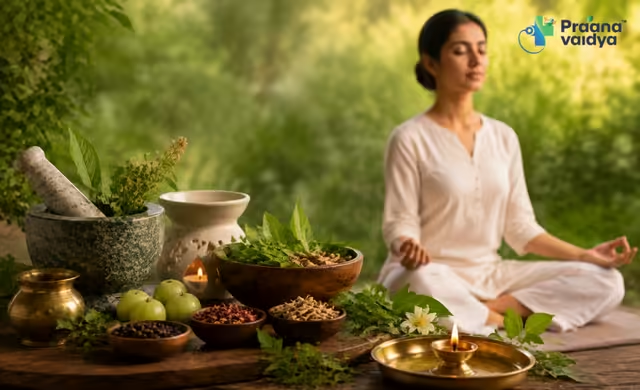
The relationship between the mind and body is an important theme in Ayurveda. Rather than viewing mental wellbeing as something completely separate from physical health, Ayurveda traditionally considers the two to be closely connected through diet, lifestyle, sleep, digestion, emotions, sensory experiences, and daily habits.
The traditional understanding of mind and Ayurveda includes concepts such as Manas, Sattva, Rajas and Tamas, Prakriti, Doshas, Agni, and the influence of daily routine.
From this perspective, mental wellbeing is not simply about eliminating uncomfortable emotions. It is also about developing steadiness, awareness, healthy routines, appropriate sensory experiences, and a balanced lifestyle.
At the same time, Ayurveda should complement appropriate modern healthcare. Persistent anxiety, depression, severe mood changes, thoughts of self-harm, hallucinations, or other serious psychological symptoms require professional mental-health care.
How Does Ayurveda Understand the Mind?
In Ayurvedic philosophy, the mind is commonly referred to as Manas.
Manas is traditionally associated with functions such as:
- Perception
- Attention
- Thinking
- Emotional responses
- Sensory coordination
- Decision-making processes
Ayurvedic thought recognises that the mind is constantly influenced by what a person sees, hears, eats, experiences, thinks about, and surrounds themselves with.
This makes mental wellbeing more than simply a matter of thoughts.
Lifestyle and environment also matter.
Mind, Body and Consciousness in Ayurveda
Ayurveda traditionally distinguishes between several aspects of human experience.
These include:
- Sharira – the physical body
- Manas – the mind
- Indriya – the sensory faculties
- Atman – consciousness or self
The traditional framework therefore considers wellbeing from multiple dimensions.
A person may have physical strength but still experience mental restlessness. Similarly, someone may have an apparently healthy routine but experience emotional exhaustion.
Ayurveda attempts to understand these experiences as part of an interconnected system.
The Three Mental Qualities: Sattva, Rajas and Tamas
One of the most important Ayurvedic and yogic concepts concerning the mind is the three Gunas:
- Sattva
- Rajas
- Tamas
These are traditionally understood as qualities influencing mental states and behaviour.
They are not equivalent to modern psychiatric diagnoses.
Sattva: Clarity and Balance
Sattva is traditionally associated with:
- Clarity
- Calmness
- Awareness
- Understanding
- Compassion
- Contentment
- Emotional steadiness
A Sattvic-oriented lifestyle generally emphasises habits that support awareness and moderation.
Examples include:
- Fresh, wholesome foods
- Regular sleep
- Meditation
- Yoga
- Self-reflection
- Positive relationships
- Time in nature
- Meaningful activities
The goal is not to eliminate every difficult emotion but to cultivate greater clarity in responding to life.
Rajas: Activity and Restlessness
Rajas is traditionally associated with movement, activity, stimulation, ambition, and emotional intensity.
A certain degree of activity is necessary in everyday life.
However, excessive stimulation may traditionally be associated with:
- Restlessness
- Impatience
- Overthinking
- Irritability
- Excessive desire
- Difficulty slowing down
Modern lifestyles can contain many Rajasic influences, including constant notifications, excessive screen time, multitasking, irregular schedules, and chronic work pressure.
Ayurvedic-inspired routines may therefore emphasise periods of quiet and reduced stimulation.
Tamas: Heaviness and Inertia
Tamas is traditionally associated with:
- Inertia
- Heaviness
- Dullness
- Resistance to change
- Excessive sleep
- Lack of motivation
Again, Tamas should not be confused with depression or another clinical condition.
A person experiencing persistent low mood, loss of interest, hopelessness, or significant functional difficulties should seek professional mental-health support rather than attempting to interpret the symptoms solely through the Gunas.
What Is the Ayurvedic Mind-Body Connection?
The Ayurvedic understanding of mind and Ayurveda places considerable importance on the relationship between emotional and physical experiences.
For example, stress may influence:
- Appetite
- Digestion
- Sleep
- Energy
- Muscle tension
- Daily habits
Likewise, poor sleep, irregular eating, inactivity, or digestive discomfort can affect how a person feels mentally.
Modern medicine also recognises many interactions between psychological and physiological processes, although the terminology and mechanisms differ from traditional Ayurvedic concepts.
The Role of Doshas in Mental Experiences
Ayurveda traditionally describes mental and emotional tendencies in relation to Vata, Pitta and Kapha.
These descriptions are part of Ayurvedic theory and should not be interpreted as psychiatric categories.
Vata and the Mind
Vata is traditionally associated with movement, change, and variability.
When Vata qualities are considered excessive, traditional descriptions may include:
- Restlessness
- Excessive thinking
- Irregular sleep
- Difficulty settling down
- Worry
An Ayurvedic routine may therefore emphasise regularity, warmth, grounding activities, and adequate rest.
Pitta and the Mind
Pitta is associated with transformation, intensity, and sharpness.
Excessive Pitta qualities may traditionally be associated with:
- Irritability
- Impatience
- Perfectionism
- Excessive intensity
- Frustration
Traditional approaches may emphasise cooling routines, relaxation, moderation, and avoiding excessive stimulation.
Kapha and the Mind
Kapha is associated with stability, heaviness, and cohesion.
When Kapha qualities are considered excessive, traditional descriptions may include:
- Lethargy
- Excessive sleep
- Reduced motivation
- Attachment
- Mental heaviness
Ayurvedic lifestyle approaches may emphasise movement, variety, sunlight, and stimulating activities.
These are traditional frameworks, not methods for diagnosing mental illness.
Pranayama and Mental Calm
Pranayama refers to traditional breathing practices.
Slow, controlled breathing can encourage relaxation and help a person become more aware of their breathing patterns.
A simple approach may involve:
- Sitting comfortably
- Relaxing the shoulders
- Breathing gently
- Avoiding forceful breath retention
- Maintaining attention on the breath
Not every breathing technique is suitable for every person.
People with certain respiratory or cardiovascular conditions should seek appropriate guidance before practising advanced techniques.
Common Misconceptions About Mind and Ayurveda
Myth 1: Ayurveda Can Cure Every Mental-Health Condition
Ayurveda may offer supportive lifestyle practices, but serious mental-health conditions require appropriate professional care.
Myth 2: Negative Thoughts Mean a Person Has a “Bad Dosha”
Mental experiences are complex. Dosha concepts should not be used to blame or label someone.
Myth 3: Meditation Means Having No Thoughts
Meditation does not necessarily require the mind to become completely blank.
Myth 4: Every Ayurvedic Herb Is Safe
Herbs can have pharmacological effects, side effects, and interactions.
Myth 5: Mental Wellbeing Depends Only on Diet
Food is one component of wellbeing. Sleep, relationships, physical activity, environment, stress, and professional support can also be important.
Final Thoughts
The relationship between mind and Ayurveda is broader than simply using herbs to address stress or emotional discomfort.
Ayurveda traditionally considers mental wellbeing in the context of Manas, Sattva, Rajas, Tamas, Doshas, Prakriti, daily routine, diet, sleep, sensory experiences, and lifestyle.
This whole-person perspective encourages habits that can support a more balanced daily life: regular sleep, nourishing food, movement, meditation, appropriate breathing practices, time away from excessive stimulation, and meaningful social connection.
At the same time, traditional concepts should not be confused with modern psychiatric diagnoses. Persistent anxiety, depression, severe mood changes, or other serious symptoms require appropriate professional evaluation and treatment.
Ayurvedic practices can potentially complement modern mental-wellness care when used thoughtfully.
Ultimately, supporting the mind is not about achieving a state in which difficult emotions never occur. It is about developing healthy routines, awareness, resilience, and appropriate support so that challenges can be approached with greater stability and clarity.
Visit Us in-
Rajajinagar- 08065903133
Hubballi – 08065903145
Indiranagar- 08065903135
Mumbai-08065903118
Yelahanka- 08065903134
Mangaluru-08065903136
Chamrajpet-08065903132
Delhi-08065903140
Lucknow-08065903130
Frequently Asked Questions About Mind and Ayurveda
What does Ayurveda say about the mind?
Ayurveda traditionally views the mind, body, senses, and consciousness as interconnected aspects of human wellbeing. The mind is commonly referred to as Manas.
What are Sattva, Rajas and Tamas?
Sattva, Rajas, and Tamas are three traditional Gunas associated with different qualities of mental experience. Sattva relates to clarity, Rajas to activity and stimulation, and Tamas to heaviness or inertia.
Can Ayurveda help with stress?
Ayurvedic lifestyle practices such as regular routines, yoga, meditation, appropriate breathing practices, sleep hygiene, and relaxation may support general wellbeing and stress management.
What is the connection between Doshas and the mind?
Ayurveda traditionally describes Vata, Pitta, and Kapha as influencing different mental and physical tendencies. These concepts are part of traditional Ayurvedic theory and are not modern psychiatric diagnoses.
Which Ayurvedic herbs are traditionally used for the mind?
Ashwagandha, Brahmi, Shankhpushpi, Jatamansi, and Tulsi are among the herbs traditionally discussed in relation to mental wellbeing. Their suitability depends on the individual and the preparation.
Can Ayurvedic massage help relaxation?
Traditional oil massage, or Abhyanga, is commonly used as a relaxation and self-care practice. It should not be considered a replacement for treatment of mental-health conditions.
Praanavaidya
Healthcare Professional
Focused on patient-centric care and evidence-based treatment plans.
More from Praanavaidya