Ayurveda and yoga share several traditional concepts related to the relationship between the body, mind, consciousness, and overall wellbeing. Among these concepts are chakras, which are described in yogic and Tantric traditions as subtle energy centres associated with different aspects of human experience.
Although the chakra system is not the same as the Ayurvedic Dosha system, the two traditions are often discussed together because both take a holistic view of wellbeing.
The concept of chakras and Ayurveda can therefore be explored through practices such as yoga, meditation, breathing exercises, lifestyle routines, and traditional Ayurvedic approaches to maintaining balance.
At Praanavaidya, these concepts can be approached as part of a broader traditional wellness perspective, with individual needs and constitution taken into consideration.
What Are Chakras?
The word chakra is derived from Sanskrit and is commonly translated as “wheel” or “disc.”
In traditional yogic philosophy, chakras are described as subtle centres associated with different dimensions of physical, emotional, mental, and spiritual experience.
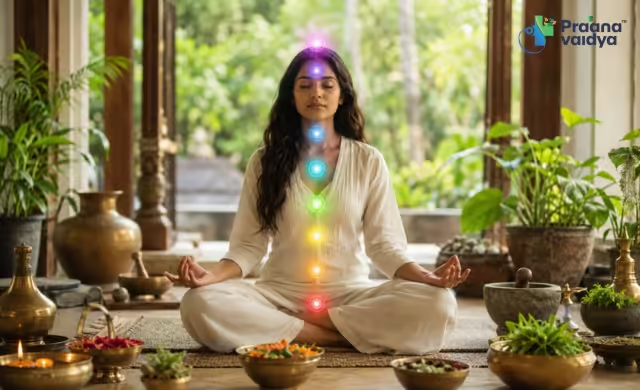
The commonly discussed system consists of seven major chakras located along the central axis of the body:
- Muladhara – Root Chakra
- Svadhisthana – Sacral Chakra
- Manipura – Solar Plexus Chakra
- Anahata – Heart Chakra
- Vishuddha – Throat Chakra
- Ajna – Third-Eye Chakra
- Sahasrara – Crown Chakra
It is important to understand that chakras belong primarily to traditional yogic and Tantric frameworks. They should not be presented as anatomical organs or scientifically established energy structures.
Are Chakras Part of Ayurveda?
Chakras and Ayurveda are related through broader Indian philosophical and traditional health systems, but they are not identical concepts.
Ayurveda primarily uses frameworks such as:
- Vata, Pitta and Kapha
- Prakriti
- Vikriti
- Agni
- Dhatus
- Malas
- Ojas
- Srotas
Yogic traditions, meanwhile, discuss concepts such as:
- Chakras
- Nadis
- Prana
- Kundalini
- Meditation
- Pranayama
These frameworks can overlap in traditional wellness practices, but they should not be treated as interchangeable.
The Seven Chakras and Their Traditional Associations
1. Muladhara Chakra
The Muladhara, or root chakra, is traditionally associated with the base of the body and themes such as stability, grounding, security, and connection with the physical world.
Traditional practices associated with grounding may include:
- Walking
- Mindful movement
- Yoga
- Regular daily routines
- Meditation
From an Ayurvedic lifestyle perspective, maintaining regular routines and adequate rest can also support a sense of stability.
2. Svadhisthana Chakra
The Svadhisthana, or sacral chakra, is traditionally associated with creativity, emotions, pleasure, relationships, and fluidity.
Practices commonly associated with supporting emotional balance include:
- Gentle yoga
- Breath awareness
- Meditation
- Creative activities
- Mindful self-reflection
Ayurveda similarly recognises the importance of emotional wellbeing and balanced daily routines.
3. Manipura Chakra
The Manipura, or solar plexus chakra, is traditionally associated with personal power, confidence, transformation, and inner strength.
In yogic traditions, this centre is also symbolically associated with fire.
This creates an interesting parallel with the Ayurvedic concept of Agni, although the two concepts should not be treated as identical.
Agni in Ayurveda refers broadly to digestive and metabolic processes within its traditional framework.
Practices that encourage a structured routine may include:
- Regular meals
- Appropriate physical activity
- Yoga
- Breathwork
- Mindfulness
4. Anahata Chakra
The Anahata, or heart chakra, is traditionally associated with compassion, love, connection, kindness, and emotional openness.
Traditional practices may include:
- Meditation
- Compassion practices
- Gentle yoga
- Breath awareness
- Mindful relationships
From a broader Ayurvedic perspective, emotional wellbeing is considered an important part of a person’s overall state.
5. Vishuddha Chakra
The Vishuddha, or throat chakra, is traditionally associated with communication, self-expression, and truthful expression.
Practices traditionally associated with this area include:
- Mantra practice
- Meditation
- Pranayama
- Mindful communication
- Chanting
These practices may encourage awareness of breathing, voice, attention, and emotional expression.
6. Ajna Chakra
The Ajna, commonly called the third-eye chakra, is traditionally associated with awareness, intuition, concentration, and inner observation.
Meditative practices are particularly relevant to this traditional concept.
Examples include:
- Focused meditation
- Breath awareness
- Mindfulness
- Visualisation
- Contemplative practices
These practices can encourage calm attention and self-awareness, although claims about specific physiological effects of chakra activation should not be presented as established medical facts.
7. Sahasrara Chakra
The Sahasrara, or crown chakra, is traditionally associated with consciousness, spiritual awareness, and a sense of connection beyond the individual self.
It is often represented symbolically as a thousand-petalled lotus.
Traditional practices associated with Sahasrara include:
- Meditation
- Contemplation
- Spiritual practices
- Silence
- Self-reflection
This chakra is generally discussed in philosophical and spiritual contexts rather than as a physical structure.
Chakras and the Ayurvedic Concept of Prana
Prana is an important concept in Ayurveda and yoga.
It is traditionally described as a vital life force associated with movement and vitality.
Yoga traditions describe the movement of Prana through subtle pathways known as Nadis.
The chakra system is traditionally discussed in relation to these subtle pathways.
Ayurveda also describes different forms of Vata, including Prana Vata, which is associated with functions involving the mind, senses, respiration, and consciousness.
Although these concepts are related within traditional Indian frameworks, they should not be equated directly with modern anatomical or physiological structures.
How Yoga Relates to Chakras and Ayurveda
Yoga and Ayurveda have developed alongside one another within Indian traditions and are often combined in holistic wellness practices.
Different yoga postures and practices are traditionally associated with different areas of the body and chakra system.
For example:
- Grounding postures may be associated with Muladhara
- Hip-opening practices may be associated with Svadhisthana
- Core-focused practices may be associated with Manipura
- Heart-opening postures may be associated with Anahata
- Breath and mantra practices may be associated with Vishuddha
- Meditation may be associated with Ajna and Sahasrara
The specific associations can vary between yoga traditions.
Can Ayurveda Balance Chakras?
The idea of “balancing chakras” is primarily derived from yogic and spiritual traditions rather than being a standard Ayurvedic medical diagnosis.
An Ayurvedic practitioner may instead assess factors such as:
- Prakriti
- Vikriti
- Dosha patterns
- Agni
- Sleep
- Diet
- Lifestyle
- Mental wellbeing
Yoga, meditation, and other traditional practices may then be incorporated into a broader wellness routine where appropriate.
Therefore, it is more accurate to describe chakra practices as a traditional spiritual and mind-body approach rather than claiming that Ayurvedic medicine directly treats a medically defined chakra imbalance.
Ayurvedic Practices That May Complement Chakra-Based Wellness
A holistic routine may include several traditional practices.
Abhyanga
Ayurvedic oil massage, or Abhyanga, is traditionally used to promote relaxation and support a regular self-care routine.
Yoga
Yoga can combine physical movement, breath awareness, and concentration.
Pranayama
Traditional breathing practices can encourage focused attention and mindful breathing.
Meditation
Meditation may support calmness, concentration, and self-awareness.
Dinacharya
Following an appropriate daily routine can encourage regularity in sleep, meals, activity, and personal care.
These practices should be selected according to individual needs and physical ability.
Final Thoughts
The relationship between chakras and Ayurveda is best understood within the broader context of India’s traditional approaches to health, yoga, spirituality, and mind-body wellbeing.
The seven-chakra system provides a traditional framework for exploring themes such as grounding, creativity, personal strength, compassion, communication, awareness, and spiritual connection. Ayurveda provides a different but complementary framework centred on concepts such as Doshas, Prakriti, Vikriti, Agni, diet, lifestyle, and overall balance.
Yoga, meditation, Pranayama, mindful movement, and appropriate Ayurvedic routines can be incorporated into a holistic wellness practice.
At the same time, chakras should not be presented as scientifically established anatomical structures or as substitutes for medical diagnosis and treatment.
At Praanavaidya, traditional Ayurvedic principles can be explored through personalised consultation, with attention to lifestyle, constitution, daily routine, diet, and overall wellbeing.
Visit Us in-
Rajajinagar- 08065903133
Hubballi – 08065903145
Indiranagar- 08065903135
Mumbai-08065903118
Yelahanka- 08065903134
Mangaluru-08065903136
Chamrajpet-08065903132
Delhi-08065903140
Lucknow-08065903130
Frequently Asked Questions About Chakras and Ayurveda
Are chakras part of Ayurveda?
Chakras are primarily discussed within yogic and Tantric traditions. They are related to broader Indian philosophical systems and are sometimes incorporated into holistic Ayurvedic wellness discussions, but they are not the same as the Ayurvedic Dosha system.
How many chakras are there?
The commonly discussed modern chakra system includes seven major chakras: Muladhara, Svadhisthana, Manipura, Anahata, Vishuddha, Ajna, and Sahasrara.
What are the seven chakras?
The seven commonly discussed chakras are the root, sacral, solar plexus, heart, throat, third-eye, and crown chakras.
Can Ayurveda balance chakras?
Ayurveda and yoga may be combined in traditional wellness practices involving meditation, breathing, yoga, and lifestyle routines. However, “chakra imbalance” is not a standard biomedical diagnosis.
Can yoga help balance chakras?
Yoga is traditionally associated with the chakra system, and different postures may be linked symbolically with different chakras. Yoga can also support physical movement, relaxation, and mindful awareness.
What is the connection between Prana and chakras?
In traditional yoga and Ayurveda, Prana is described as a vital life force, while chakras are described as subtle energy centres. Nadis are traditionally described as pathways through which Prana moves.
Praanavaidya
Healthcare Professional
Focused on patient-centric care and evidence-based treatment plans.
More from Praanavaidya