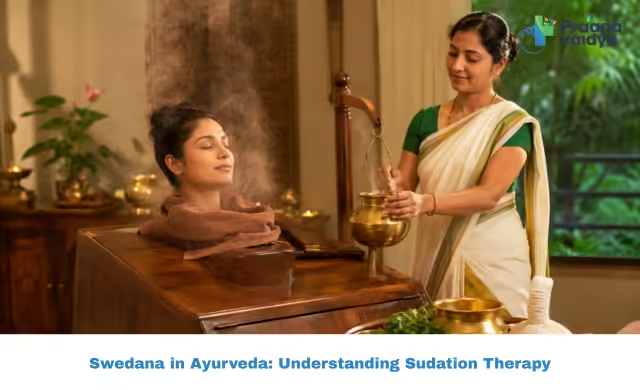
Heat has been used in traditional wellness practices for centuries. In Ayurveda, therapeutic heat is approached through a specialised practice known as Swedana.
The word Swedana is associated with sweating or perspiration. In Ayurvedic therapy, it refers broadly to methods used to induce controlled sweating through heat, steam, warm herbal preparations, or other prescribed techniques.
Swedana in Ayurveda is not simply the same as sitting in a steam room. Traditional Swedana is selected according to the individual’s health condition, Dosha involvement, strength, season, and therapeutic objective.
It may be used independently in some situations or as part of a broader Ayurvedic treatment plan.
At Praanavaidya, Ayurvedic consultation can help determine whether Swedana is appropriate and which form of sudation therapy may be suitable for an individual’s needs.
What Is Swedana in Ayurveda?
Swedana is an Ayurvedic therapeutic approach involving controlled application of heat to encourage perspiration.
Depending on the method, heat may be delivered through:
- Steam
- Herbal boluses
- Warm herbal preparations
- Heated air
- Warm liquids
- Localised heat
- Specialised Ayurvedic equipment
The objective is not simply to make a person sweat as much as possible.
Instead, Ayurvedic practitioners select the intensity, duration, method, and area of application according to the person’s condition.
Why Is Swedana Used in Ayurveda?
Swedana is traditionally associated with several therapeutic objectives.
Ayurvedic texts describe sweating as a process that can help:
- Reduce stiffness
- Relieve a feeling of heaviness
- Support flexibility
- Promote relaxation
- Prepare the body for certain therapies
- Support Vata-Kapha management
Swedana is also commonly used as a Purvakarma, or preparatory procedure, before certain Panchakarma therapies.
The exact purpose depends on the treatment plan.
How Does Ayurvedic Sudation Therapy Work?
The basic principle is straightforward:
Controlled heat → increased warmth → perspiration → relaxation and temporary softening of tissues
From an Ayurvedic perspective, heat is used to influence certain qualities associated with the Doshas.
Swedana is particularly associated with reducing qualities such as:
- Coldness
- Stiffness
- Heaviness
- Rigidity
However, the therapy must be appropriately controlled because excessive heat can aggravate symptoms in certain individuals.
Different Types of Swedana
Ayurveda describes numerous forms of sudation therapy.
The method selected depends on the treatment objective and the individual.
1. Bashpa Sweda
Bashpa Sweda is a steam-based sudation therapy.
The person is exposed to herbal steam while the head may be kept outside the steam chamber depending on the traditional procedure and equipment used.
Herbal ingredients may be added to the steam according to the treatment plan.
It is commonly used when broader whole-body sweating is desired.
2. Nadi Sweda
Nadi Sweda uses steam directed through a tube toward specific areas of the body.
This allows the therapist to focus warmth on particular regions rather than exposing the entire body to steam.
It may be considered for localised stiffness or discomfort.
3. Pinda Sweda
Pinda Sweda involves warm boluses or pouches containing selected materials.
These may include:
- Herbs
- Rice
- Leaves
- Powders
- Other therapeutic ingredients
The warm bolus is applied to specific areas using controlled movements.
Different Pinda Sweda preparations are selected for different therapeutic purposes.
4. Patra Pinda Sweda
This form uses herbal leaves prepared into warm boluses.
The leaves may be combined with other ingredients and heated before being applied to the body.
It is traditionally used in certain musculoskeletal and Vata-Kapha-oriented treatment approaches.
5. Churna Pinda Sweda
This involves warm herbal powders packed into boluses.
The boluses are applied to selected areas of the body.
The herbs and preparation method vary according to the Ayurvedic treatment plan.
6. Ekanga Sweda
Ekanga Sweda refers broadly to sudation applied to a specific part of the body.
Instead of inducing whole-body sweating, the treatment can be directed toward the area requiring attention.
This may be useful when only a particular region needs therapeutic warmth.
7. Sarvanga Sweda
Sarvanga Sweda refers to whole-body sudation.
It may be selected when the treatment objective requires broader exposure to therapeutic warmth.
The intensity and duration are carefully controlled.
What Are the Traditional Benefits of Swedana?
Swedana is traditionally used for several purposes.
Helps Reduce the Feeling of Stiffness
Warmth may help the body feel more relaxed and flexible.
This is one reason Swedana is frequently incorporated into Ayurvedic approaches to musculoskeletal discomfort.
Supports Relaxation
Controlled heat can create a calming experience.
Muscles may feel more relaxed following a suitable heat-based treatment.
May Help With a Feeling of Heaviness
Ayurveda associates Kapha with heaviness and sluggishness.
Swedana is traditionally used to counter these qualities in appropriate individuals.
Supports Preparation for Certain Ayurvedic Therapies
One of the important roles of Swedana is as a preparatory procedure.
It may be used alongside Snehana, or oleation, before selected Panchakarma procedures.
In this context, Swedana is not necessarily the main treatment.
Instead, it forms part of a larger therapeutic sequence.
How Long Does Swedana Take?
There is no universal duration.
Treatment time depends on:
- Type of Swedana
- Area treated
- Individual tolerance
- Therapeutic objective
- Overall health
- Treatment protocol
Longer sessions are not automatically more effective.
Excessive heat exposure can cause dehydration, dizziness, weakness, or overheating.
Swedana for Muscle Stiffness
One of the commonly discussed applications of Ayurvedic sudation is musculoskeletal care.
Warmth can help muscles feel temporarily more relaxed.
Swedana may therefore be incorporated into Ayurvedic approaches involving:
- Stiffness
- Restricted movement
- Muscular tension
- Certain joint discomfort
- Vata-Kapha-related musculoskeletal patterns
However, persistent pain, swelling, weakness, or restricted movement requires appropriate clinical assessment.
Swedana for Stress and Relaxation
A controlled heat treatment can be relaxing for some people.
When combined with a quiet environment and appropriate Ayurvedic massage, Swedana may become part of a broader relaxation routine.
However, it should not be considered a treatment for anxiety, depression, or other mental health conditions.
Swedana and Skin Care
Sweating temporarily increases moisture on the skin and may create a refreshed feeling.
However, claims that Swedana “detoxifies the skin” or permanently removes toxins through sweat are overly simplistic.
The body’s major detoxification processes involve organs such as the liver and kidneys.
Swedana should therefore be viewed primarily as a traditional therapeutic heat practice rather than a detox shortcut.
Conclusion
Swedana in Ayurveda is a traditional sudation therapy based on the controlled application of heat to encourage perspiration. Unlike simply using a sauna or steam room, Ayurvedic Swedana is selected according to the individual’s condition, Dosha involvement, strength, season, and therapeutic objective.
It may be used to support relaxation, reduce the feeling of stiffness and heaviness, and prepare the body for selected Ayurvedic therapies. Different forms—including Bashpa Sweda, Nadi Sweda, and Pinda Sweda—allow treatment to be adapted to different therapeutic needs.
The central principle is controlled heat, not excessive sweating. More heat or longer treatment does not necessarily mean greater benefit.
Because heat therapy may not be suitable for everyone, proper Ayurvedic assessment is important before treatment.
At Praanavaidya, consultation can help determine whether Swedana is appropriate for your individual needs and which form of Ayurvedic sudation therapy may best fit your treatment plan.
Visit Us in-
Rajajinagar- 08065903133
Hubballi – 08065903145
Indiranagar- 08065903135
Mumbai-08065903118
Yelahanka- 08065903134
Mangaluru-08065903136
Chamrajpet-08065903132
Delhi-08065903140
Lucknow-08065903130
Frequently Asked Questions
What is Swedana in Ayurveda?
Swedana in Ayurveda is a traditional therapeutic approach that uses controlled heat to induce perspiration. It may involve steam, heated herbal preparations, boluses, or localised heat.
What is Ayurvedic sudation therapy used for?
It is traditionally used to support relaxation, reduce the feeling of stiffness and heaviness, and prepare the body for selected Ayurvedic therapies.
What is the difference between Swedana and a normal steam bath?
Swedana is selected and administered according to an Ayurvedic treatment objective, with consideration of factors such as Dosha, health status, intensity, duration, and method.
What are the different types of Swedana?
Commonly discussed forms include Bashpa Sweda, Nadi Sweda, Pinda Sweda, Patra Pinda Sweda, Churna Pinda Sweda, Ekanga Sweda, and Sarvanga Sweda.
Is Swedana suitable for everyone?
No. Heat-based therapies may not be appropriate for people with certain medical conditions, fever, dehydration, heat intolerance, or other contraindications.
Can Swedana help with joint stiffness?
Swedana is traditionally used in Ayurvedic approaches to stiffness and certain musculoskeletal conditions. Persistent or severe joint symptoms should receive appropriate medical evaluation.
Can Swedana be done at home?
Professional Swedana is best performed under supervision. Excessive steam or heat exposure at home can cause burns, dehydration, or overheating.
Is Swedana the same as Panchakarma?
No. Swedana is a separate Ayurvedic therapy that may sometimes be used as part of Panchakarma preparation or alongside other treatments.
Praanavaidya
Healthcare Professional
Focused on patient-centric care and evidence-based treatment plans.
More from Praanavaidya