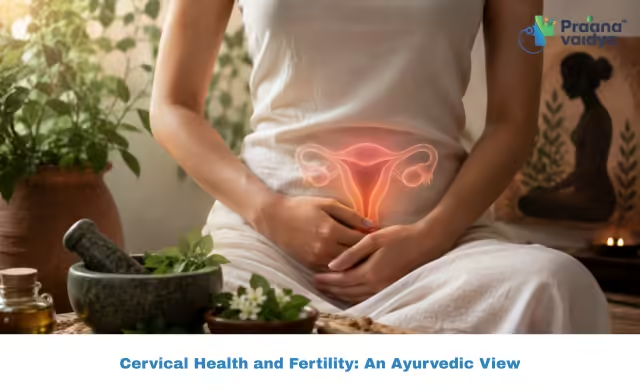
When couples are trying to conceive, attention often goes straight to ovulation, menstrual cycles, egg health, and sperm quality. But there is another part of the female reproductive system that deserves attention: the cervix.
The cervix is the lower part of the uterus that connects the uterus with the vagina. Although small, it has important roles in reproductive health. Its position, cervical mucus, and response to hormonal changes can influence how sperm move through the reproductive tract.
This makes cervical health and fertility closely connected, although cervical health is only one part of the much larger fertility picture.
From a modern medical perspective, cervical infections, structural abnormalities, inflammation, cervical procedures, and changes in cervical mucus can sometimes affect reproductive health. Some conditions require specific gynecological treatment and should not be managed solely with alternative therapies.
Ayurveda approaches women’s reproductive wellness from a broader perspective. It considers Apana Vata, Artava, digestive health, nutrition, stress, sleep, and overall Dosha balance when assessing reproductive health.
At Praanavaidya, Ayurvedic consultations focus on understanding the individual rather than treating fertility as a single condition. Personalised dietary, lifestyle, and Ayurvedic recommendations may be provided as supportive care alongside appropriate gynecological evaluation.
What Is the Cervix?
The cervix is a narrow passage located at the lower end of the uterus.
It performs several important functions.
The cervix:
- Connects the uterus and vagina
- Produces cervical mucus
- Changes throughout the menstrual cycle
- Helps protect the uterus from infection
- Provides a pathway for menstrual blood
- Dilates during childbirth
Its characteristics are influenced by reproductive hormones, particularly estrogen and progesterone.
How Does the Cervix Relate to Fertility?
The cervix plays an important role in the journey of sperm through the female reproductive tract.
Around ovulation, rising estrogen levels can cause cervical mucus to become:
- Clearer
- More slippery
- More abundant
- Stretchable
This fertile-type mucus can create a more favourable environment for sperm movement.
After ovulation, hormonal changes generally make cervical mucus thicker and less conducive to sperm passage.
Therefore, observing cervical mucus can sometimes provide useful information about the fertile window.
However, cervical mucus alone cannot confirm ovulation or fertility.
What Can Affect Cervical Health?
Several factors may influence cervical health.
These include:
Cervical Infections
Certain transmitted infections, including human papillomavirus (HPV), can affect cervical health.
Regular cervical screening is important for detecting abnormalities early.
Cervical Inflammation
Inflammation of the cervix, known as cervicitis, can result from infections or other causes.
Symptoms may include:
- Abnormal vaginal discharge
- Bleeding after intercourse
- Pelvic discomfort
- Pain during intercourse
Structural Changes
Some women may have cervical polyps, scarring, or other structural changes.
These conditions require assessment by a gynecologist.
Previous Cervical Procedures
Certain procedures involving the cervix may alter cervical structure or mucus production in some individuals.
The impact depends on the procedure and individual circumstances.
Can Poor Cervical Mucus Affect Conception?
Cervical mucus is important because it can help sperm survive and travel through the reproductive tract.
If fertile-type mucus is consistently limited, sperm movement may potentially be affected.
However, reduced cervical mucus is only one possible fertility factor.
Other factors include:
- Ovulation
- Egg quality
- Fallopian tube health
- Uterine health
- Endometriosis
- Age
- Sperm health
- Hormonal conditions
Therefore, difficulty conceiving should never be attributed to cervical mucus alone.
Cervical Health Through an Ayurvedic Lens
Ayurveda does not have a direct one-to-one equivalent of the modern anatomical cervix.
Instead, Ayurvedic physicians assess reproductive health through broader concepts involving Artava, Shukra, Apana Vata, Dhatus, Agni, and overall Dosha balance.
For women, Apana Vata has a particularly important role in functions associated with menstruation, elimination, and childbirth.
A balanced Apana Vata is traditionally considered important for healthy reproductive function.
Why Apana Vata Matters
Apana Vata governs downward-moving physiological processes.
According to Ayurveda, it is associated with:
- Menstruation
- Elimination
- Urination
- Childbirth
- Reproductive functions
When Vata becomes disturbed, Ayurveda may consider associated changes in menstrual regularity, pelvic discomfort, digestion, or reproductive function.
This does not mean that every fertility problem is caused by Vata imbalance. Ayurvedic assessment considers the individual’s complete health picture.
The Importance of Agni in Reproductive Wellness
Ayurveda considers healthy digestion fundamental to the nourishment of all body tissues.
Agni, or digestive and metabolic capacity, helps transform food into nutrients that support the body’s tissues.
When digestion is impaired, Ayurveda describes the possibility of Ama, or incompletely processed metabolic waste.
For reproductive wellness, maintaining healthy digestion and adequate nourishment is therefore considered important.
This is one reason Ayurvedic fertility care often begins with seemingly unrelated areas such as:
- Digestion
- Appetite
- Bowel habits
- Sleep
- Stress
- Nutrition
What Does Ayurveda Mean by Artava?
Artava is an important Ayurvedic concept associated with female reproductive health and menstruation.
Ayurvedic texts discuss Artava in relation to:
- Menstrual function
- Reproductive capacity
- Ovulatory processes as interpreted within Ayurvedic frameworks
An Ayurvedic consultation may therefore examine menstrual characteristics rather than focusing only on a specific reproductive organ.
Questions may include:
- Is the cycle regular?
- How long does bleeding last?
- Is menstrual pain present?
- Are there significant changes from cycle to cycle?
- What is the nature of the menstrual flow?
These details help the physician understand the individual’s reproductive pattern.
Ayurvedic Support for Cervical and Reproductive Wellness
Ayurvedic care is generally individualised rather than based on one universal treatment.
Depending on the assessment, recommendations may include:
Nourishing Diet
A balanced diet provides the nutrients required for overall reproductive health.
Ayurvedic dietary guidance may emphasise:
- Freshly prepared food
- Adequate protein
- Seasonal vegetables
- Fruits
- Whole grains
- Healthy fats in appropriate quantities
- Adequate hydration
The exact diet depends on constitution, digestion, nutritional needs, and health conditions.
Supporting a Healthy Menstrual Routine
Maintaining regular daily habits can support overall reproductive wellness.
Helpful practices may include:
- Regular meal times
- Adequate sleep
- Moderate exercise
- Stress management
- Avoiding excessive physical strain
- Maintaining a healthy body weight
Ayurveda places particular importance on routine because irregular daily habits are traditionally considered capable of disturbing Vata.
Ayurvedic Herbal Support
Depending on the individual’s constitution and reproductive health concerns, an Ayurvedic physician may prescribe selected herbs or classical formulations.
The purpose may be to support:
- Menstrual health
- Digestion
- General nourishment
- Stress management
- Reproductive wellness
Herbs should not be self-prescribed when trying to conceive.
Some herbal products may interact with medications or may not be appropriate during pregnancy.
Panchakarma and Fertility Care
Panchakarma is sometimes included in Ayurvedic fertility programmes, but it is not appropriate for everyone.
If a physician considers cleansing therapies appropriate, the choice depends on:
- Constitution
- Dosha imbalance
- Digestive strength
- Age
- Menstrual status
- Overall health
- Whether conception is being actively attempted
Panchakarma should always be performed under qualified supervision.
It should not be undertaken during pregnancy unless specifically medically indicated within an appropriate clinical setting.
What About Cervical Infections?
This is an area where appropriate medical care is particularly important.
Symptoms such as:
- Unusual vaginal discharge
- Foul-smelling discharge
- Bleeding after intercourse
- Pelvic pain
- Pain during intercourse
- Fever
may indicate an infection or another gynecological condition.
These symptoms require evaluation by a gynecologist.
Ayurvedic care should not be used as a substitute for antibiotics, antiviral treatment, procedures, or other medically indicated treatment.
Is Cervical Screening Essential
Good reproductive health includes appropriate cervical screening.
Screening can help identify cervical abnormalities before they develop into more serious disease.
Depending on age, risk factors, and local guidelines, screening may involve:
- HPV testing
- Pap testing
- Other cervical screening methods
Women should follow the screening schedule recommended by their healthcare provider.
Ayurvedic wellness practices can complement preventive healthcare but should never replace cervical screening.
When Should You Seek Fertility Evaluation?
If pregnancy has not occurred despite regular unprotected intercourse, it is worth discussing fertility with a qualified healthcare professional.
Evaluation may be recommended sooner when there is:
- Irregular or absent menstruation
- Known PCOS
- Endometriosis
- Previous pelvic infection
- Known reproductive tract problems
- Previous fertility treatment
- Recurrent pregnancy loss
- Advanced reproductive age
Fertility involves both partners, so evaluation of sperm health is equally important.
Conclusion
Cervical health and fertility are connected, but the cervix is only one part of the reproductive system. Healthy cervical mucus, the absence of infection, and normal cervical structure can contribute to reproductive function, while conception also depends on ovulation, egg health, fallopian tubes, uterine health, sperm quality, hormones, and several other factors.
Ayurveda approaches reproductive wellness through a broader framework that includes Apana Vata, Artava, Agni, nutrition, Dosha balance, lifestyle, and mental well-being. Personalised dietary guidance, appropriate Ayurvedic medicines, stress management, and selected therapies may be used to support overall reproductive health.
At Praanavaidya, Ayurvedic consultations focus on understanding the individual’s menstrual, digestive, lifestyle, and reproductive patterns before recommending personalised care. If you have concerns about cervical health, abnormal discharge, pelvic pain, irregular periods, or difficulty conceiving, timely gynecological evaluation should be combined with any Ayurvedic wellness approach.
Visit Us in-
Rajajinagar- 08065903133
Hubballi – 08065903145
Indiranagar- 08065903135
Mumbai-08065903118
Yelahanka- 08065903134
Mangaluru-08065903136
Chamrajpet-08065903132
Delhi-08065903140
Lucknow-08065903130
Frequently Asked Questions
Can cervical health affect fertility?
Certain cervical conditions, including infections, structural abnormalities, and changes in cervical mucus, may affect fertility in some individuals. However, fertility depends on multiple factors.
Does cervical mucus indicate ovulation?
Changes in cervical mucus can provide a useful fertility awareness sign, particularly when mucus becomes clear, slippery, and stretchy around the fertile window. It does not independently confirm ovulation.
Can Ayurveda improve cervical health?
Ayurveda may support overall reproductive wellness through personalised diet, lifestyle, stress management, and appropriate therapies. Specific cervical abnormalities require gynecological diagnosis and treatment.
Can Ayurvedic treatment help with fertility?
Ayurvedic care may support general reproductive wellness and address factors such as nutrition, lifestyle, digestion, and stress. It should complement—not replace—evidence-based fertility evaluation and treatment.
Is Panchakarma safe while trying to conceive?
Not every Panchakarma procedure is appropriate during the conception period. Treatment should be planned by a qualified Ayurvedic physician with awareness of the individual’s reproductive status.
Praanavaidya
Healthcare Professional
Focused on patient-centric care and evidence-based treatment plans.
More from Praanavaidya