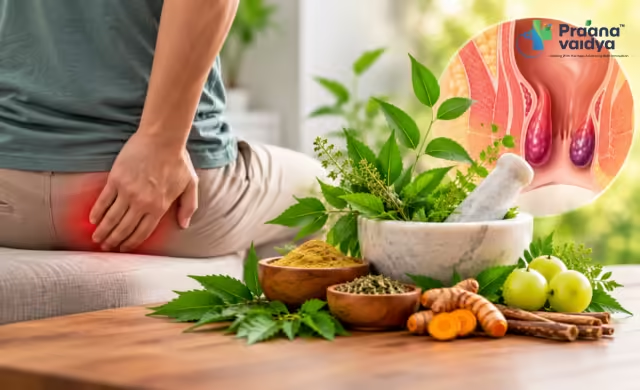
Many people use the word piles to describe any swelling or discomfort around the anal region, but not all piles are the same. Some develop inside the rectum and may go unnoticed until they bleed, while others form outside the anus and can cause pain, itching, or swelling that is difficult to ignore.
Knowing whether you have internal or external piles is important because the symptoms, severity, and treatment approach can differ. While both conditions involve swollen veins in the anorectal region, their location and presentation influence how they are managed.
From the perspective of Ayurveda, piles are described as Arshas, a condition associated with disturbances in the digestive system, aggravated Doshas, chronic constipation, poor bowel habits, and weakened digestive fire (Agni). Instead of focusing only on the swollen veins, Ayurveda aims to identify the underlying factors that contribute to recurring symptoms.
At Praanavaidya, Ayurvedic physicians perform a detailed evaluation before recommending treatment. Management is personalised and may include herbal medicines, dietary guidance, Panchakarma, or specialised Ayurvedic procedures depending on the type and stage of piles.
What Are Piles?
Piles, also known as haemorrhoids, are swollen and enlarged veins in the lower rectum or around the anus.
Normally, these veins help maintain bowel control. However, excessive pressure may cause them to enlarge, leading to symptoms such as bleeding, pain, itching, or swelling.
Piles are broadly classified into:
- Internal piles
- External piles
Some individuals may also develop a combination of both.
What Are Internal Piles?
Internal piles develop inside the rectum, above the dentate line.
Because this area contains fewer pain-sensitive nerves, internal piles often remain painless during the early stages.
Many people discover them only after noticing bright red bleeding during bowel movements.
Common Symptoms of Internal Piles
- Bright red bleeding while passing stool
- Mucus discharge
- Feeling of incomplete bowel emptying
- Prolapse during bowel movements
- Minimal or no pain initially
- Discomfort if prolapsed
Internal piles are commonly classified into grades based on the degree of prolapse.
What Are External Piles?
External piles develop under the skin around the anus.
Unlike internal piles, this area contains many pain-sensitive nerve endings.
As a result, external piles are more likely to cause discomfort.
Common Symptoms of External Piles
- Pain around the anus
- Swelling
- Itching
- Burning sensation
- Tender lump near the anal opening
- Difficulty sitting comfortably
If a blood clot develops within an external pile, it may become extremely painful. This condition is known as a thrombosed external haemorrhoid and requires prompt medical evaluation.
Internal vs External Piles: Key Differences
| Feature | Internal Piles | External Piles |
| Location | Inside the rectum | Around the anus |
| Pain | Usually minimal in early stages | Often painful |
| Bleeding | Common | Less common unless irritated |
| Swelling | Usually not visible initially | Often visible or palpable |
| Itching | May occur | Common |
| Prolapse | Possible | Not applicable |
Only a healthcare professional can accurately determine the type of piles through examination.
Why Do Piles Develop?
Several factors increase the likelihood of developing piles.
These include:
- Chronic constipation
- Straining during bowel movements
- Sitting on the toilet for prolonged periods
- Low-fibre diet
- Pregnancy
- Obesity
- Sedentary lifestyle
- Heavy lifting
- Increasing age
Many people have more than one contributing factor.
Internal vs External Piles in Ayurveda
Ayurveda describes piles under the condition known as Arshas.
According to classical Ayurvedic texts, piles develop due to disturbances in:
- Vata Dosha
- Pitta Dosha
- Kapha Dosha
- Agni (digestive fire)
One of the most important contributing factors is chronic digestive imbalance leading to constipation and excessive straining.
Although Ayurveda does not simply classify treatment based on internal or external piles alone, physicians carefully assess the location, severity, bleeding, pain, and Dosha predominance before planning treatment.
Does the Ayurvedic Treatment Differ?
Yes.
Although the overall principles remain similar, internal and external piles may require different treatment priorities depending on the individual’s symptoms.
Internal Piles
If bleeding is the predominant symptom, treatment may focus on:
- Supporting digestive health
- Balancing aggravated Pitta
- Improving bowel habits
- Physician-prescribed herbal medicines
For advanced prolapsing piles, specialised procedures such as Kshara Karma may be considered when appropriate.
External Piles
If pain and swelling are more prominent, treatment may focus on:
- Reducing discomfort
- Supporting healthy bowel movements
- Balancing aggravated Vata
- Local Ayurvedic therapies where indicated
The exact treatment depends on clinical evaluation rather than the type alone.
Ayurvedic Therapies That May Be Recommended
Depending on the patient’s condition, treatment may include:
+
+
Ayurvedic medicines are selected after evaluating:
- Dosha imbalance
- Bleeding
- Pain
- Constipation
- Digestive health
- Overall medical condition
Self-medication should be avoided.
For selected patients, Kshara Karma is a specialised Ayurvedic para-surgical procedure described in classical texts for managing certain types of piles.
Its suitability depends on the grade of piles and the physician’s assessment.
Some individuals may benefit from Panchakarma therapies to support digestive health and Dosha balance.
The choice of therapy is always individualised.
How Praanavaidya Approaches Piles
At Praanavaidya, treatment begins with a detailed consultation rather than a one-size-fits-all approach.
The physician evaluates:
- Whether the piles are internal or external
- Severity and grade
- Bleeding
- Pain
- Constipation
- Digestive strength (Agni)
- Dosha imbalance
- Lifestyle
- Existing medical conditions
Based on the assessment, the treatment plan may include:
- Personalised Ayurvedic medicines
- Dietary counselling
- Lifestyle modifications
- Kshara Karma where appropriate
- Panchakarma therapies when indicated
- Regular follow-up
The aim is to relieve symptoms, improve digestive health, and reduce the likelihood of recurrence.
Conclusion
Understanding the difference between Internal vs External Piles is essential because each type presents differently and may require a tailored management approach. While internal piles commonly cause painless bleeding and prolapse, external piles are more often associated with pain, swelling, and discomfort.
From an Ayurvedic perspective, both forms of Arshas are linked to digestive imbalance, Dosha disturbances, and chronic constipation. Rather than focusing only on the swollen veins, Ayurveda aims to improve digestive health, regulate bowel habits, and restore internal balance through personalised care.
At Praanavaidya, experienced Ayurvedic physicians evaluate each patient individually to determine the most appropriate treatment plan, which may include herbal medicines, dietary guidance, lifestyle modifications, Panchakarma therapies, or specialised procedures such as Kshara Karma when indicated. Early consultation and appropriate management can help improve comfort and support long-term anorectal health.
Visit Us in-
Rajajinagar- 08065903133
Hubballi – 08065903145
Indiranagar- 08065903135
Mumbai-08065903118
Yelahanka- 08065903134
Mangaluru-08065903136
Chamrajpet-08065903132
Delhi-08065903140
Lucknow-08065903130
Frequently Asked Questions
Can internal piles become external?
Internal piles may prolapse outside the anus in advanced stages, but they are different from external piles, which originate beneath the skin around the anus.
Which type is more painful?
External piles are generally more painful because they occur in an area with many pain-sensitive nerve endings.
Can Ayurveda treat both internal and external piles?
Ayurveda offers personalised management for both types through herbal medicines, dietary changes, lifestyle modifications, and specialised procedures where appropriate. Treatment depends on the individual’s condition.
Is surgery always necessary?
No. Many patients can be managed without surgery, while others with advanced disease may require procedural treatment. The appropriate option depends on clinical evaluation.
Can piles return after treatment?
Yes. Without addressing constipation, diet, and bowel habits, piles may recur regardless of the treatment method.
Praanavaidya
Healthcare Professional
Focused on patient-centric care and evidence-based treatment plans.
More from Praanavaidya