
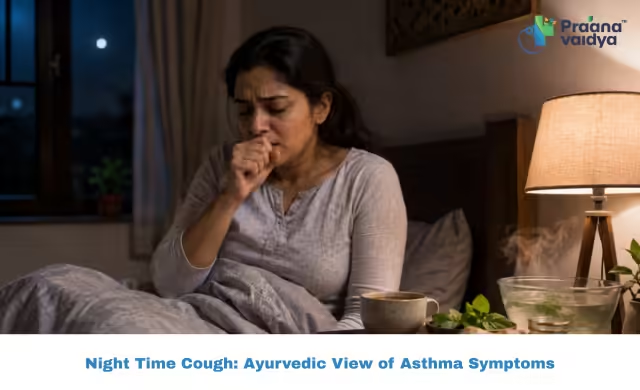
Many people with asthma notice a familiar pattern—breathing feels manageable during the day, but as night approaches, coughing begins, wheezing increases, and sleep becomes disturbed. If you’ve ever asked yourself why your night time cough becomes more intense after sunset, you’re not alone.
Modern medicine recognises this as nocturnal asthma, a condition where asthma symptoms worsen during the night due to natural changes in airway function, body temperature, hormone levels, and exposure to allergens. Ayurveda, however, offers a broader explanation. It considers night-time respiratory discomfort as the result of an imbalance in Kapha Dosha, aggravated Vata, weakened digestive fire (Agni), and the accumulation of Ama that obstructs the respiratory channels.
Rather than focusing only on suppressing cough, Ayurveda seeks to understand why symptoms recur repeatedly and how the body’s internal balance can be restored. Through personalised herbal medicines, Panchakarma therapies, diet, and lifestyle guidance, Ayurvedic management aims to support healthier breathing and long-term respiratory wellness.
At Praanavaidya, treatment begins with a detailed consultation to identify the individual’s Dosha imbalance, respiratory health, digestive strength, and lifestyle before preparing a personalised care plan.
What Is Night Time Cough?
A night time cough refers to coughing that becomes more frequent or severe after going to bed or during the night. In people with asthma, it is often accompanied by:
- Wheezing
- Chest tightness
- Difficulty breathing
- Interrupted sleep
- Early morning coughing
- Feeling breathless after waking
Although occasional coughing at night can occur with viral infections or acid reflux, persistent night-time coughing should be medically evaluated, especially if it lasts for several weeks.
Why Does Asthma Become Worse at Night?
Modern medicine suggests several reasons why asthma symptoms become more noticeable during the night.
These include:
- Natural narrowing of the airways during sleep
- Increased airway inflammation
- Reduced cortisol levels at night
- Exposure to dust mites in bedding
- Cooler nighttime air
- Gastroesophageal reflux (GERD)
- Postnasal drip from allergies or sinusitis
While these factors explain the physiological changes, Ayurveda looks deeper into the body’s internal functioning.
How Ayurveda Explains Night Time Cough
In Ayurveda, asthma is described as Tamaka Shwasa, a respiratory disorder involving the obstruction of Pranavaha Srotas (respiratory channels).
Night-time worsening is primarily associated with the aggravation of Kapha Dosha, which naturally becomes dominant during the evening and early morning hours.
When aggravated Kapha combines with disturbed Vata Dosha, mucus accumulates within the respiratory passages while the movement of air becomes restricted. This results in coughing, wheezing, chest heaviness, and breathlessness.
Ayurveda therefore considers night time cough to be more than a symptom—it is often a sign of an underlying Dosha imbalance.
The Role of Kapha During the Night
According to Ayurvedic daily rhythms (Dinacharya), Kapha predominates during the evening and early morning.
Kapha is responsible for:
- Lubrication
- Stability
- Mucus production
- Tissue nourishment
When Kapha is aggravated due to improper diet, sedentary habits, or weak digestion, excessive mucus may accumulate in the airways.
As the body rests at night, this mucus may contribute to coughing and breathing difficulty.
Weak Agni and Ama
Another important concept in Ayurveda is Agni, the digestive fire.
When digestion becomes weak, food is not completely processed, leading to the formation of Ama.
Ama is believed to circulate through the body and obstruct various channels, including the respiratory system.
In individuals with asthma, Ama combined with Kapha may increase congestion and contribute to recurrent night time cough.
For this reason, improving digestion forms an important part of Ayurvedic treatment.
Ayurvedic Treatment for Night Time Cough
The goal of Ayurvedic management is to restore balance rather than simply suppress coughing.
Treatment is individualised and may include several approaches.
Personalised Ayurvedic Medicines
Ayurvedic physicians prescribe herbal medicines based on:
- Dosha imbalance
- Severity of symptoms
- Digestive health
- Age
- Associated illnesses
- Overall constitution
Since asthma differs from person to person, medicines should only be taken under professional supervision.
Panchakarma Therapies
For selected patients, Panchakarma may be recommended as part of a comprehensive treatment plan.
Vamana Karma
Vamana is a physician-supervised therapeutic emesis procedure traditionally recommended for conditions involving aggravated Kapha.
It aims to eliminate excess Kapha and support healthier respiratory function in carefully selected individuals.
Nasya
Nasya involves administering medicated oils or herbal preparations through the nasal passages.
It is traditionally used to support the health of the head and upper respiratory tract and may be recommended based on the physician’s assessment.
Swedana
Herbal steam therapy may help loosen accumulated mucus, promote comfort, and complement other Ayurvedic treatments.
Diet to Help Reduce Night-Time Symptoms
Diet plays a key role in Ayurvedic respiratory care.
General recommendations may include:
- Eating freshly prepared warm meals
- Having dinner at least two to three hours before bedtime
- Choosing light, easily digestible evening meals
- Drinking warm water throughout the day
- Supporting healthy digestion with physician-recommended dietary practices
Depending on the individual’s condition, physicians may also advise limiting foods that are believed to aggravate Kapha, such as heavy, oily, refrigerated, or overly processed meals.
Dietary advice is always personalised.
Conclusion
A recurring night time cough can affect far more than your sleep—it can reduce energy levels, interfere with daily activities, and impact your overall quality of life. While modern medicine explains nocturnal asthma through physiological changes in the airways, Ayurveda views it as a manifestation of deeper imbalances involving Kapha, Vata, Agni, and Ama.
Rather than focusing solely on symptom relief, Ayurvedic management aims to improve respiratory health through personalised herbal medicines, appropriate Panchakarma therapies, dietary guidance, and sustainable lifestyle modifications.
At Praanavaidya, experienced Ayurvedic physicians carefully assess each individual’s health before recommending a treatment plan. If you regularly experience night time cough, wheezing, or disturbed sleep due to asthma, consulting a qualified Ayurvedic physician can help you explore a personalised approach that complements your ongoing medical care while supporting long-term respiratory wellness.
Visit Us in-
Rajajinagar- 08065903133
Hubballi – 08065903145
Indiranagar- 08065903135
Mumbai-08065903118
Yelahanka- 08065903134
Mangaluru-08065903136
Chamrajpet-08065903132
Delhi-08065903140
Lucknow-08065903130
Frequently Asked Questions
Is night time cough always caused by asthma?
No. Night-time coughing may also occur due to allergies, acid reflux, sinusitis, respiratory infections, or certain medications. A proper medical evaluation is important to identify the cause.
Can Ayurveda cure asthma permanently?
Asthma is a chronic condition. Ayurveda focuses on supporting respiratory health, balancing Doshas, and improving overall well-being, but it does not guarantee a permanent cure.
Is Panchakarma suitable for everyone with asthma?
No. Panchakarma therapies are recommended only after a detailed evaluation by a qualified Ayurvedic physician.
Can I stop my inhaler if I start Ayurvedic treatment?
No. Continue all prescribed asthma medications unless your treating physician advises otherwise. Ayurveda should be used as a complementary approach, not a replacement for emergency asthma care.
Does digestion really affect respiratory health?
According to Ayurveda, healthy digestion supports overall balance in the body. Poor digestion and the accumulation of Ama are believed to contribute to various disorders, including respiratory conditions in susceptible individuals.
Praanavaidya
Healthcare Professional
Focused on patient-centric care and evidence-based treatment plans.
More from Praanavaidya