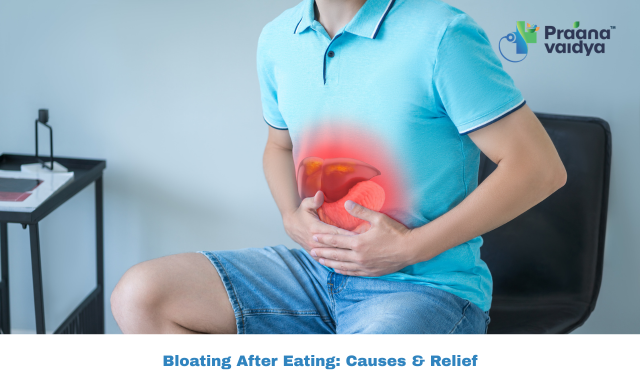
Bloating after eating is one of the most common digestive complaints today. Many people experience a feeling of heaviness, tightness, or fullness in the abdomen soon after meals. While it may seem like a minor issue, frequent bloating is often a sign of deeper digestive imbalance.
According to Ayurveda, bloating is primarily linked to weak digestion (low Agni) and imbalance in Vata dosha. When food is not digested properly, it leads to gas formation, discomfort, and irregular digestion.
At Praanavaidya, bloating is not treated as a temporary symptom but as an indicator of underlying digestive issues that need proper attention.
📞 Call / WhatsApp: 08065903127 | +91 96117 73811
What Happens in the Body When You Feel Bloated
When digestion is strong, food is broken down efficiently and nutrients are absorbed properly. However, when digestion becomes weak:
- Food remains partially undigested
- Fermentation occurs in the gut
- Gas builds up in the intestines
- The abdomen feels heavy and distended
This process explains why bloating after eating is often accompanied by gas, burping, or discomfort.
Ayurvedic Reasons for Bloating After Eating
1. Weak Digestive Fire (Low Agni)
This is the most common cause of bloating.
When Agni is weak:
- Food is not digested completely
- Toxins (Ama) begin to form
- Gas accumulates in the digestive tract
Even healthy food can cause bloating if digestion is not strong.
2. Eating Too Quickly
Eating fast prevents proper chewing and mixes air with food.
This leads to:
- Poor digestion
- Increased gas formation
- Feeling of heaviness after meals
Mindful eating is essential for proper digestion.
3. Overeating
Consuming more food than your digestive capacity overloads the system.
This results in:
- Delayed digestion
- Fermentation of food
- Increased bloating
In Ayurveda, quantity of food is as important as quality.
4. Improper Food Combinations
Certain food combinations disturb digestion, such as:
- Milk with salty or sour foods
- Fruits with heavy meals
- Dairy with fish
These combinations can slow digestion and increase gas formation.
5. Irregular Eating Habits
Skipping meals or eating at inconsistent times disrupts digestive rhythm.
This weakens Agni and leads to:
- Incomplete digestion
- Bloating
- Loss of appetite
6. Sedentary Lifestyle
Lack of physical movement slows down metabolism and digestion.
Sitting for long hours:
- Reduces digestive efficiency
- Leads to sluggish bowel movement
- Increases bloating
7. Stress and Mental Factors
Mental stress has a direct impact on digestion.
Stress can:
- Reduce digestive strength
- Alter gut function
- Cause frequent bloating
Symptoms Associated with Bloating
People experiencing bloating after eating may notice:
- Abdominal heaviness
- Tight or swollen stomach
- Excess gas
- Frequent burping
- Feeling full even after small meals
These symptoms indicate that digestion needs attention.
Long-Term Effects of Ignoring Bloating
If not addressed, chronic bloating may lead to:
- Persistent digestive disorders
- Nutrient absorption issues
- Increased toxin buildup
- Hormonal imbalance
Early correction is important to prevent complications.
Ayurvedic Treatment for Bloating
An effective ayurvedic treatment for bloating focuses on correcting digestion and reducing Vata imbalance.
1. Dietary Correction
- Prefer warm, freshly cooked food
- Avoid cold, processed, and stale food
- Include easily digestible meals
2. Proper Eating Habits
- Eat slowly and chew properly
- Avoid overeating
- Maintain regular meal timings
3. Use of Digestive Herbs
Herbs help:
- Improve digestion
- Reduce gas formation
- Support gut health
4. Lifestyle Adjustments
- Regular physical activity
- Stress management
- Adequate sleep
Foods That Help Reduce Bloating
Include:
- Warm soups and light meals
- Ginger-based preparations
- Cooked vegetables
- Herbal teas
Foods to Avoid
Avoid:
- Fried and oily foods
- Carbonated drinks
- Processed snacks
- Excess sugar and dairy
Praanavaidya’s Approach to Treat Bloating
At Praanavaidya, bloating is treated by identifying and correcting the root cause rather than providing temporary relief.
The approach includes:
Personalized Assessment
Understanding digestion, lifestyle, and symptoms.
Customized Diet Plan
A tailored plan to improve digestion and reduce bloating.
Herbal Support
Specific formulations to strengthen Agni and reduce gas.
Detox Therapies (If Needed)
In chronic cases, structured detox like Panchakarma may be recommended.
Long-Term Digestive Care
Focus on preventing recurrence through lifestyle guidance.
Conclusion
Bloating is not just a temporary discomfort—it is a signal that your digestive system needs attention. Understanding the causes and making the right changes can significantly improve your health..
If you are experiencing frequent bloating after eating, it is important to address the root cause.
Consult Praanavaidya for personalized Ayurvedic treatment and long-term digestive relief.
Our Branches
Rajajinagar- 08065903133
Hubballi – 08065903145
Indiranagar- 08065903135
Mumbai-08065903118
Yelahanka- 08065903134
Mangaluru-08065903136
Chamrajpet-08065903132
FAQs
1. What causes bloating after eating?
Bloating is usually caused by weak digestion, overeating, or improper food combinations.
2. Is bloating after eating normal?
Occasional bloating is common, but frequent bloating indicates digestive imbalance.
3. Can Ayurveda treat bloating permanently?
Yes, Ayurveda focuses on improving digestion and addressing the root cause for long-term relief.
4. What foods should I avoid to reduce bloating?
Avoid fried foods, processed items, carbonated drinks, and heavy meals.
5. When should I consult a doctor for bloating?
If bloating is frequent, severe, or persistent, consult Praanavaidya for proper diagnosis and treatment.
Praanavaidya
Healthcare Professional
Focused on patient-centric care and evidence-based treatment plans.
More from Praanavaidya